If this email looks jacked up in your email window,
click here
to see it on the website
THIS WEEKS BLOG
*this weeks comics are below the blog!*
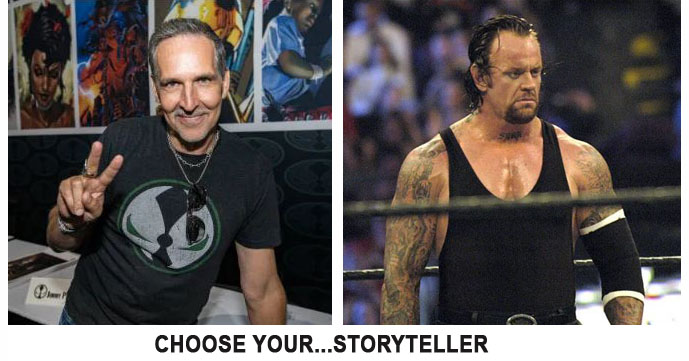
Storytelling vs displays of skill
or
Does the Undertaker know more than Todd McFarlane
First order of business, due
to technical issues on our end, only like 25% of you were getting
these emails for the last month and half. If you missed some and
you're bored, a link to them archived is
HERE
I have a lot of ground to cover
today, a plug, talk about various pitfalls of the creative process...
taking some insight from the Undertaker and examples from the WWE, and even Ox Baker. And
then comics. so let's get started...
FIRST THE PLUG...
Protect your art from AI with Glaze
or
Nightshade
To all of you out there continually
asking when I'm going to do new work. I HAVE been doing new
work.
Here's the thing with comic books, unless you are 100% in
charge of the entire process from idea to shipping the finished
product (which is more than I can handle since oh...my third
nervous breakdown) you do the job
and then it has to go to the editor, post production, printer,
distributor, and finally shipping, at a pace outside of your
control.
The time is takes from when you are done, and when it's in
stores and you can promote it, can be anywhere from
three months to...in some cases (like say...THIS one) several
years. and sometimes it never sees the light of day at all for
one reason or another (often douchebaggery).
For
examples, I knew I'd be doing work on Mad magazine, The Tick, or
the shorts on Comedy central long before I mentioned it
anywhere. There's non disclosure agreements at times, there's
the timing issue, as in promoting something to far in advance of
when people can actually go get it is counter productive, and
sometimes the studio or publisher wants to be the first to
announce it.
All of which, often leaves me sitting
looking like I'm not doing jack squat and spinning my wheels
writing blogs juxtaposing Spanish
Conquistadors and the prostitute from Full Metal
Jacket...to try and keep these
worth opening when I can't actually plug anything.
WHICH brings us to the project I may now plug! Most of you
already know of
The Last Podcast on the Left...
If somehow you don't, they
are...imagine say, an Art Bell Coast to Coast show, hosted by
Mystery Science Theater 3000. That's not really a prefect analogy, but
it is meant as high praise. They do really funny dives into off
the beaten path subjects. We're very much simpatico in our
sense of humor/what we find funny.
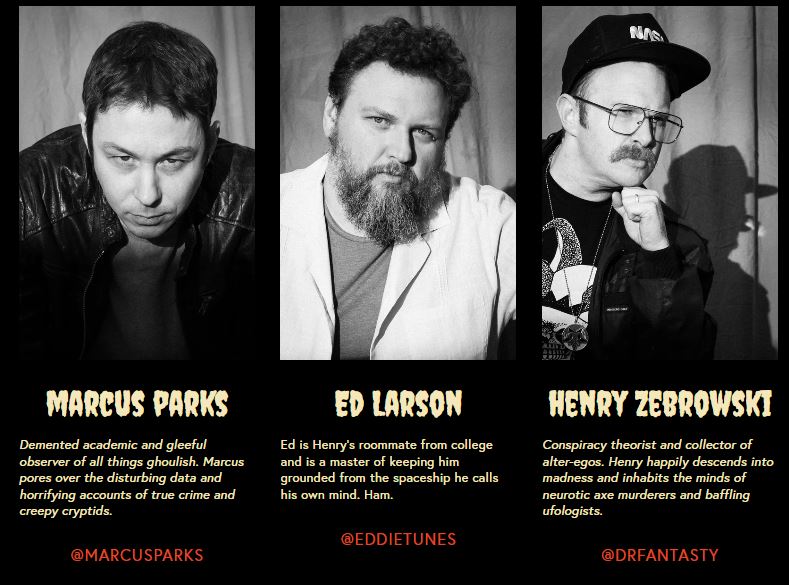
and when they asked me on board me
to do a Bonnie and Clyde story for their new volume of The Last
Comic Book on the Left, they didn't have to ask twice. And it is FINALLY...ready for order.
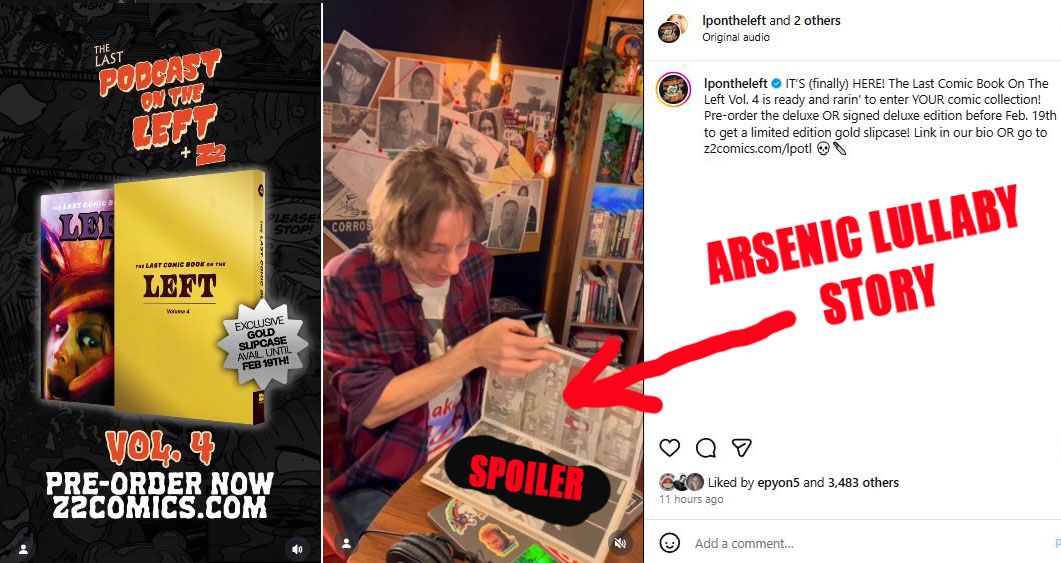
I say this with no hyperbole, it is
one of my best works ever. It is everything great
about Arsenic Lullaby in one story and I've very proud of it.
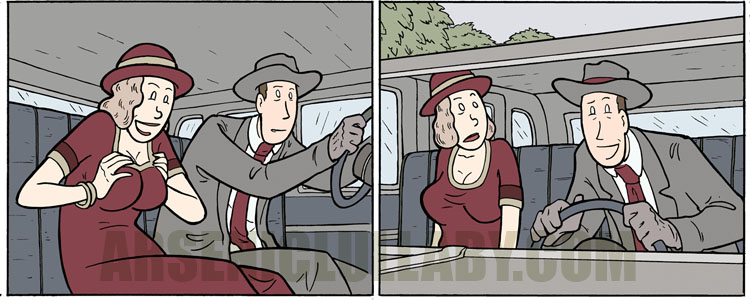
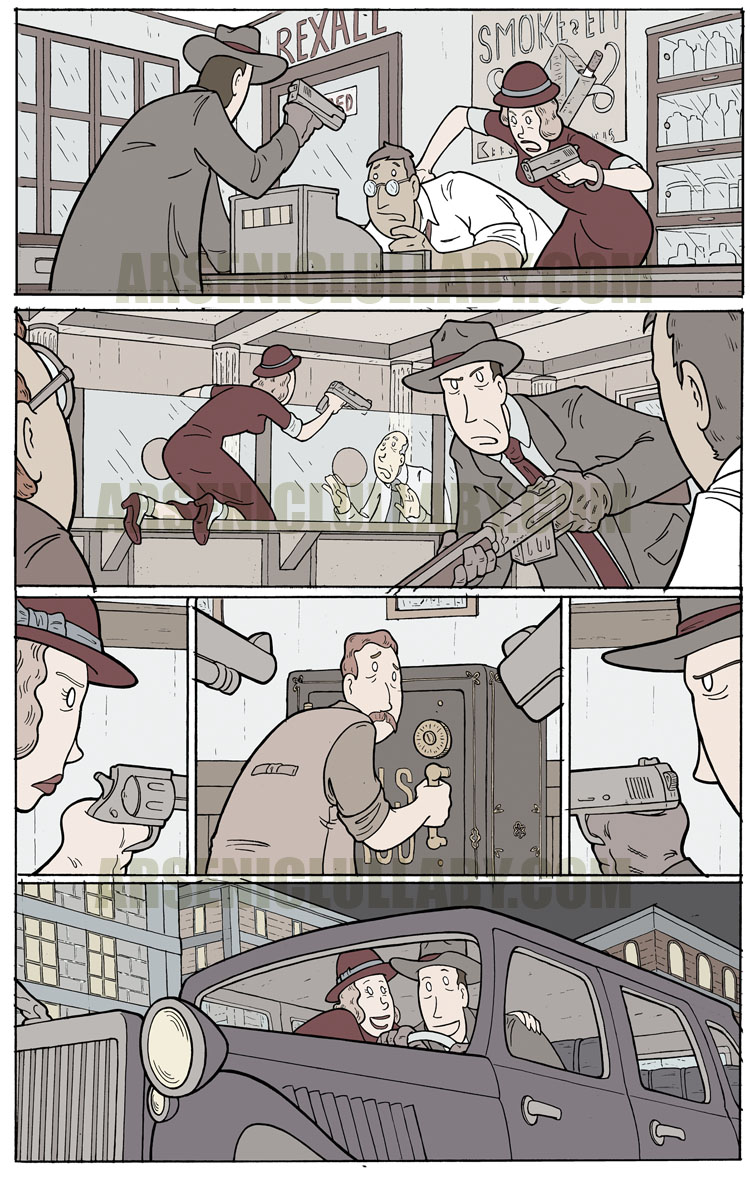
Here's a sneak preview, minus the words. It's a tale of Bonnie
and Clyde pulling jobs for Nikola Tesla. *Side note, I neglected
to double check if they were all alive at the same time until I
was half way done...they were, and all at the points in their
lives where I needed them to be. Whew.
Protip- do your research first
Protect your art from AI with Glaze
or
Nightshade
Anyone who's over 98 yrs old might have noticed the Rexall
sign, Easter egg.
There's different variations that I don't know much on the
particulars yet. Looks like a regular edition and some hardcover
large fancy versions? I'll ask Marcus what's what, and get you
all the info.
NOW THEN...
Last week there was an interview of Todd McFarlane (legendary
comic book illustrator, left Marvel Comics with a bunch of their
other top tier illustrators and founded Image Comics Publishing,
in the early 90s) and one of his answers pissed off a bunch of
pros and was making the rounds on the internet.
There is a teachable moment there, that you don't have to be
into comic industry minutia to get use out of.
he was asked -“What is more
important in a comic, art or story?
he responded- "Here’s my complete and
utter bias, and I’m going to my grave with this answer. I can
sell a book that is drawn by Michelangelo and written by my dog.
I can sell that book. But what I can’t do is sell a book that is
written by William Shakespeare and drawn by my mom.”
...uhm...oh
my goodness.
Here's a thing with people and being really talented/skilled at
something. People assume a guy's personality is equally
interesting with the work he does...and then he assumes he is.
And you get answers like that. That's the answer of someone
who's always surrounded by people who think that person's are
cool and say "hahaha good one!" no matter what he actually
sounds like.
BUT, Lemme back up a second. There's a
coupe things here to understand. First, I
have read his response. I do not know what was said before, I do
not know what he said after, I don't know the tone nor the
theme of the interview. I have two sentences, with no context.
So...there's that.
Second, Todd McFarlane is not a very good visual storyteller.
He's just just not good at it. That's not a hot take. That's
been the knock on him his entire career. He is undeniably a
brilliant illustrator...
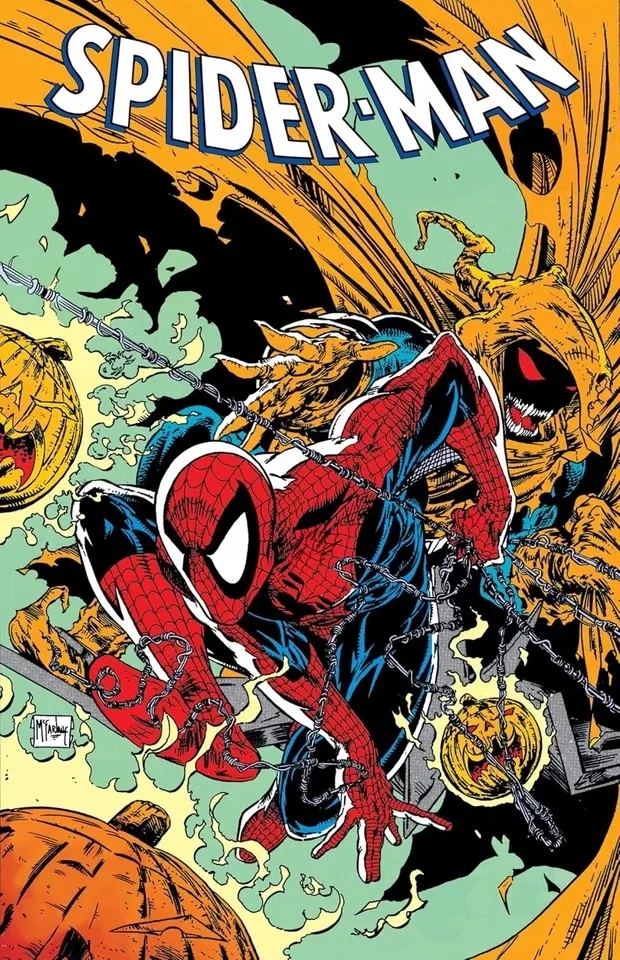
but he is sub pare at telling a story with his
illustrations. The value, the appeal of his books
are..well..they're eye candy. I'm not saying anything there
about his work that hasn't been said a thousand times...I'm
saying- what the f*ck did you think his answer was going to be?!
hahaha.
Was anyone expecting some in-depth insight to the craft of
sequential story telling? That's not who he is, not his focus.
Understanding that I do not have the full context- The blurb is
what is going around that people are arguing over. The blurb has
a life of it's own, now. Thus, I will take... that blurb... at
face value and use it to explain some things.
"Is art or writing more important to a comic book."
That's a question for "marks", to use a wresting term. It's for
people who don't understand how anything works. The entire point
of the medium of comic books is that the writing and story work
together. They are not things you can separate and say one's
more important than the other. That's not how ANYTHING works.
Are the vocals or the instruments more important in a song, is
the defense or offense more important on a football team, ...is
the engine or transmission more important in a car, if either
one sucks you're not going to go very fast.
I'm
wasting time here, because anyone who gave that question any
thought, even if they knew nothing about comics books, could
come up with the correct answer- they are equally important...to
make something great.
It comes down to...what are your
trying to DO...exactly? Trying to accomplish? What kind
of work do you want to put your effort into? Are you trying to
"sell a comic book"? or are you trying to do something more than
that?
This
crosses into all mediums. It's like this...there's people who are
musicians because they want to play music, and then there's
people who are musicians because they have music to play. knowwhatimean?
I'll use an analogy, there's the type filmmaker who
wants to make Apocalypse Now, and the type who is perfectly
happy making Fast and Furious 6.
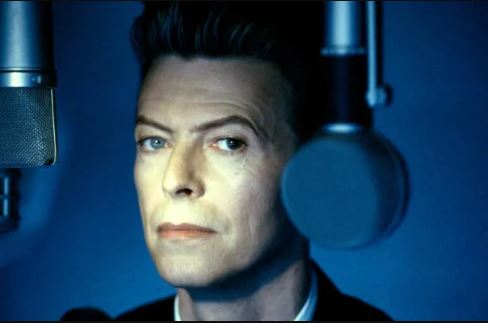
"I'm not in the music business, I'm
in the business of blowing people's minds"
David Bowie
McFarlane is more the Fast and Furious 6 type. Plenty of people
enjoyed Fast and Furious 6(not me). But that type ain't going to
give you some super insightful answer on how to create work that
uses all advantages of the medium.
The real problem
The real problem with his
comments, and the reason I'm addressing them, is that it is a bad example for
people.
Thinking that your one end of things is the be all
and end all for the success of a project, is a bad road to be
on.
It'll stress you out, it'll make you dreadful to work with, and
most importantly it will have you making terrible creative
decisions. Let's take stand up
comedy, how good you can do an impersonation of George Bush
isn't worth f*ck all and is a negative not a positive, if you
jam it in when the joke has nothing to do with George Bush.
That's an extreme example but it is pretty much what McFarlane
does on his comic book pages...
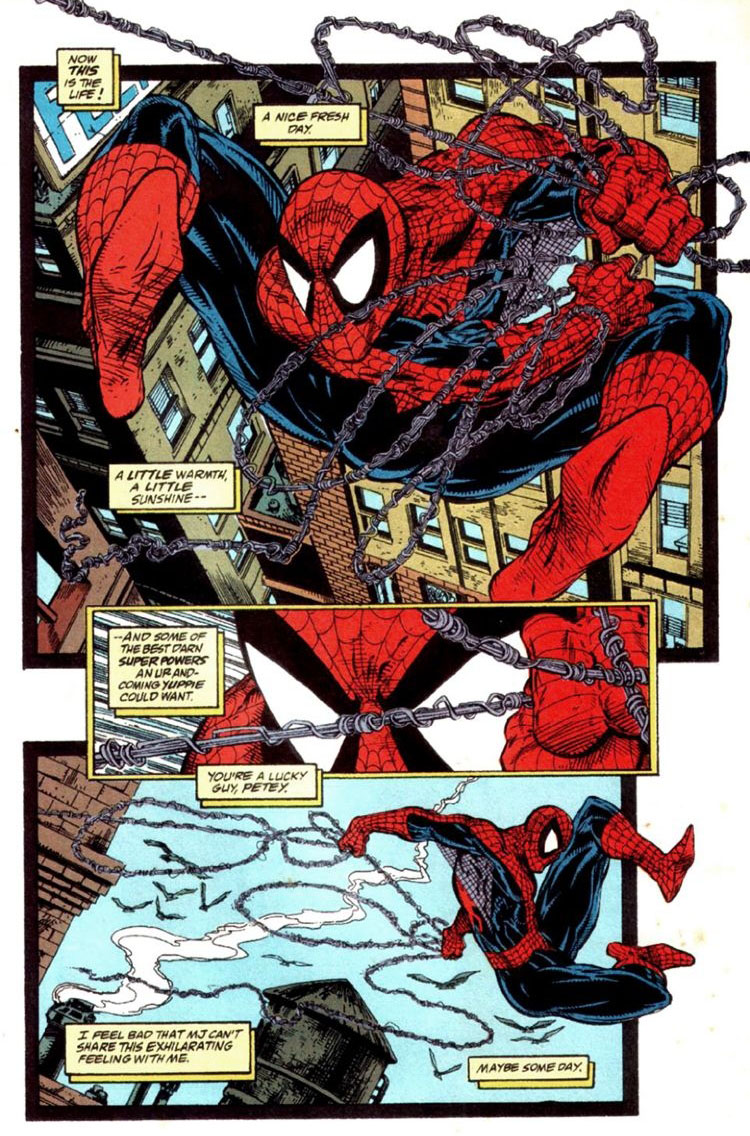
The dialogue there, and what this part of the story is...Spidey
is happy, he's enjoying swinging through the city, and wishing
his girlfriend was with him. Is that page, of which the entire
top is basically a pin-up of Spidey looking cool in an attacking
action pose...advancing that concept? Not really. Below that
pin-up we got a close up of his face...which isn't worth f*ck
all because he's in a mask, and ONE bottom panel that actually
suits the story.
Those top two panels would fit just as well on a page where he
is fleeing from the Green Goblin, or about to attack Doctor
Doom, or rushing to the hospital because his wife is having a
baby. Get what I'm saying here...it's just Spidey, in action
looking cool, but not advancing the specific story.
It could be argued that his page there, despite it being him
showboating his illustrative skill...is fine. And by itself it
is...fine. The problem isn't, in and of itself, there were
better shots and angles and poses to convey him happily swinging
through the city thinking about his girlfriend. The problem in
his creative decision making, is he burned up all that real
estate to draw two cool pictures of spider man.
That's less space he has to use for something else, before or
after. Something that could have used a few extra panels to give
pacing and tension. Or a couple of panels where something
specific is focused on or zoomed in on, over the course of
several panels, for dramatic effect. Or f*cking...who knows
what. Page space is precious in a comic book because you need it
to manipulate the sense of timing, and to build mood.
That page is helping McFarlane show off that he can draw cool
stuff, but it's not helping the story.
His whole approach, while it sold a lot of comic books...is the
reason why no one ever talks about the stories in his
comic books. They had no emotional effect on readers. Made no
connection to the audience. It's why, despite everyone being
impressed by his art, the Spider-Man storyline that
everyone raves about from that same era, and which has been
reprinted over and over and over, is Kraven's Last Hunt,
illustrated by Mike Zeck.
Zeck understood restraint and the value of page real estate and
made sure he had space to use when he needed it for effect,
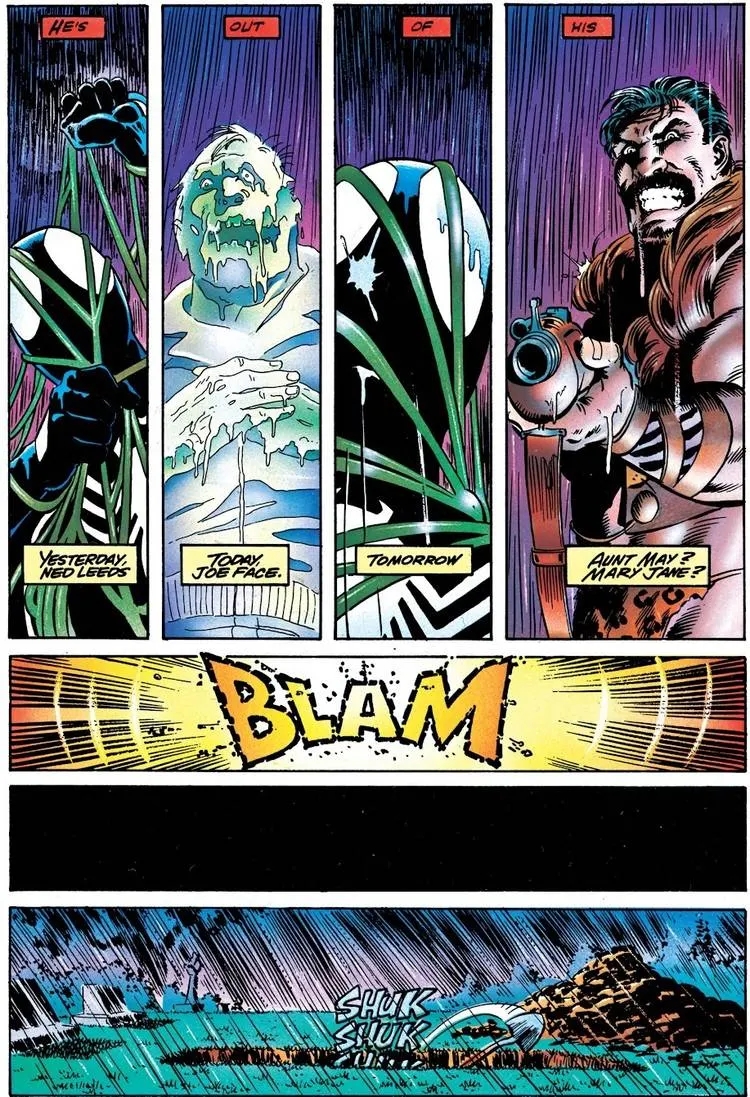
some time later in the story....
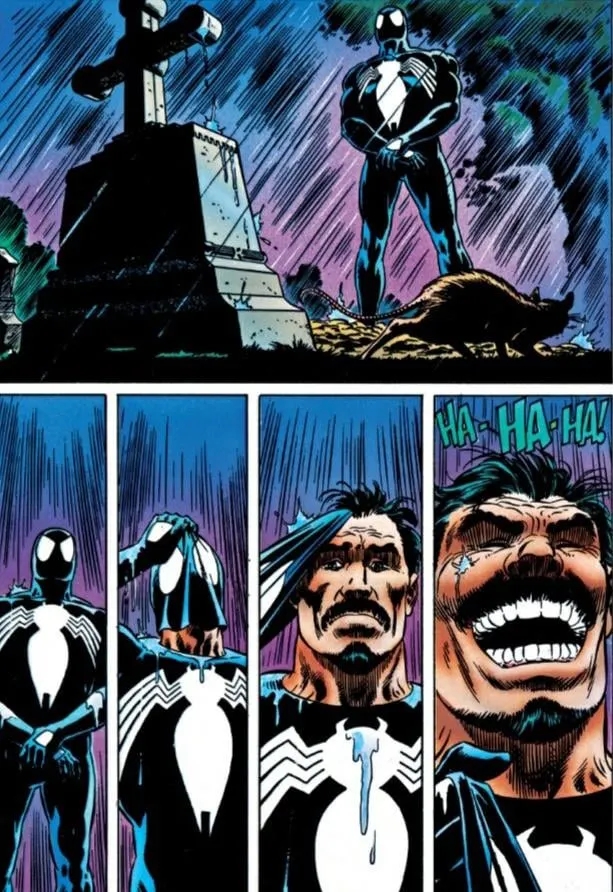
McFarlane's' approach of- the writing is there so I can draw
something cool- sells a lot of comics...once. But, as an
alternative example, The Walking Dead's writing/art that worked
together so expertly, sold a lot of comics, will sell reprinted
collections for as long as we have trees left, was able to be
turned into a hit TV show that stayed on top for years, was a
pop culture phenomenon , and sells more merch than I care think about.
Because TWD connected and made an impact on the audience.
To make
something that matters, that really grabs people, all the
elements need to
be working together, complimenting each other. The Undertaker's
opinion sets FAR BETTER EXAMPLE...
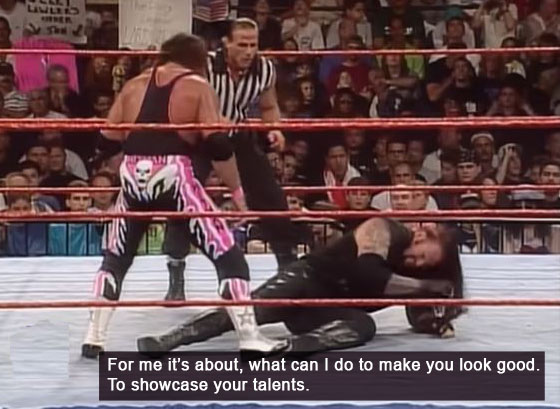
It may sound counter intuitive, but
often in creative endeavors, skill can be the enemy. Teen Spirit by Nirvana, could that
have had some masterful 2 minute guitar solo in the middle? yes.
Would that have made it better? absolutely not. it would have
been the antithesis of the entire thing.
In drawing a comic book, everything you do should be in service
of the story, mood, vibe you're trying to convey. Any skill you
put into it that isn't or is more than needed, is skill that's a
detriment to the end result.
A pitfall for illustrators and something you/they must
understand ( and I need to remember), is that there's a tipping point where something is so
well drawn or detailed it is a determent the story. A detriment to capturing
the imagination, because people only see it as a beautiful
illustration. They are looking at a marvelous drawing not
engrossed in a story.
I've tried to explain that before, but just found
a REALLY good example...here's a side by side of the original
illustration from the infamous issue of Daredevil when Electra
is killed (spoiler alert). and a homage to it (wolverine being
killed)
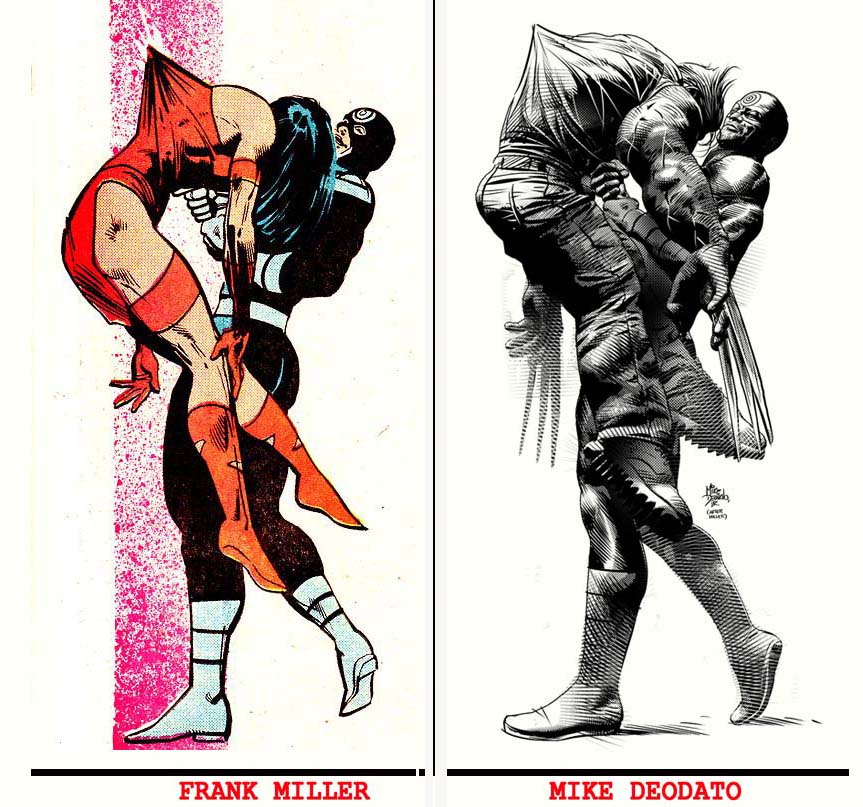
One you look at and think "wow, that
is well done" and the other one you look at and go "holy shit he
killed her". You're telling a story....what is important here?
Her being stabbed, right? About the last thing I pay attention
to in the drawing on the right is the sword about to poke right
through the back of the shirt. It's the first thing I notice on
the one on the left. There comes a point where you showing off
your skills is in opposition with tone, mood, energy, of the
story you're supposed to be telling.
"Sometimes too much is too much" in
a creative endeavor, and that crosses into every medium. A
good way to explain this is via pro wrestling. If you've
watched any lately the finishing moves are Olympic level gravity
defying gymnastics.
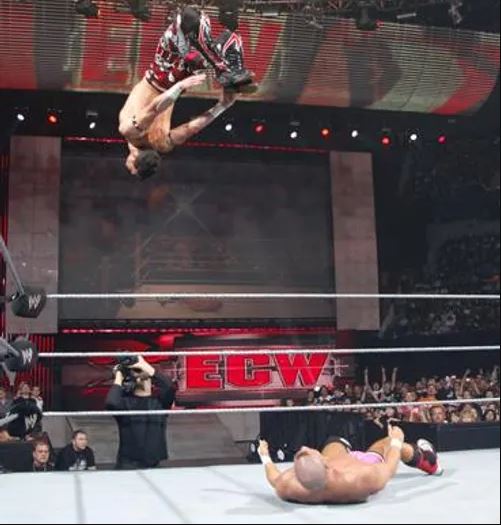
and yet...it's audience size and
relevance in the pop culture has shrunk. It's shrunk because
it's lost it's emotional connection. It's a physically amazing
display of skill, and that's all the audience is thinking about.
The in ring storytelling and drama is neutered by all the
emphasis being placed on the "moves" and not on the "why". They are
impressed by the triple flying backflip guy1 hit guy2 with, the
problem is they haven't been given a reason to give damn about
guy1 or guy2. So as amazing as it is...it has no emotional
impact.
As opposed to back in the day when
the storytelling was the emphasis. The finishing moves would be
say...Jack the Snake just plopping someone's face into the
mat.
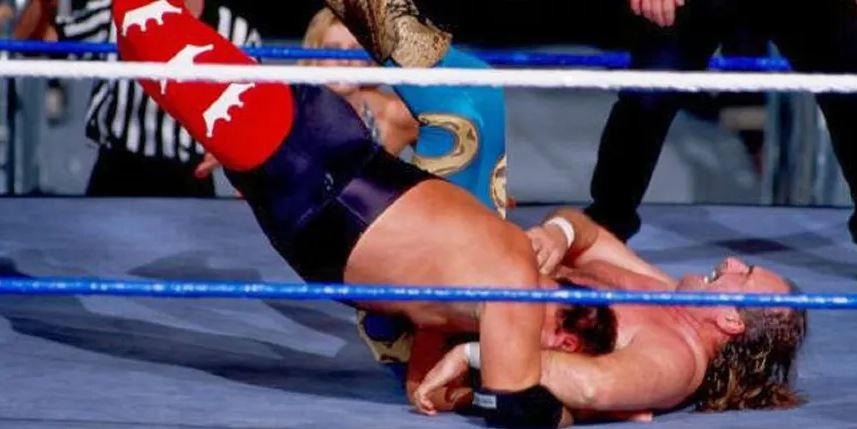
Anyone sitting on the couch could do
that move (and many of us did...to our siblings), but it was
genuinely exciting because the drama and storytelling was
steering everything. Does Jake the Snake win or lose? Does he
win clean or cheat? That was what had people on the edge of
their seats.
I'm talking about the drama leading
up to the match, the tension , the trash talk, the incidents
that happen between the two
that the audience gets to see, before they wrestlers even step
into the ring and face off. AND the in ring storytelling. They
need to not just have a fight. That fight has to have an
ebb and flow, one getting beat then having to fight his way
back, and when and what they do to each other is in service of
riling up the crowd, getting them on the edge of their seat for
the climax.
The difference between knowing how to work together to do that
and not...is the difference between nobody really caring if that
first guy can triple flying summersault onto his opponent, and
an entire stadium riveted by Jake the Snake falling down while
holding onto a guys head.
There's the working together, and the creative decision making
being story over skill, AND ALSO knowing that skill can often be the
enemy. Because, even if the storytelling was equal...let's say
the match with the flying summersault guy and the match with
Jack the snake, were equally executed, with expert in ring
storytelling...if conclusion of the match's outcome
happened with a triple summersault instead of plopping the guys
face into the mat...the audiences focus would be split
between amazement at a move and the outcome..
I talked about the comedy sin
of "two jokes on a joke", this is the wrestling version of
that...it's splitting the focus of the climax. I talked about the comedy sin
of "two jokes on a joke", this is the wrestling version of
that...it's splitting the focus of the climax.
I'll give you an extreme example of
the power of storytelling vs skill. (partially because I don't
know when I'll ever be able to bring up Ox Baker again). The unknown is a powerful
element. There was a wrestler called Ox Baker way way back, even
before my time, in the late 70s. I just stumbled upon learning
of him after going down some rabbit hole.
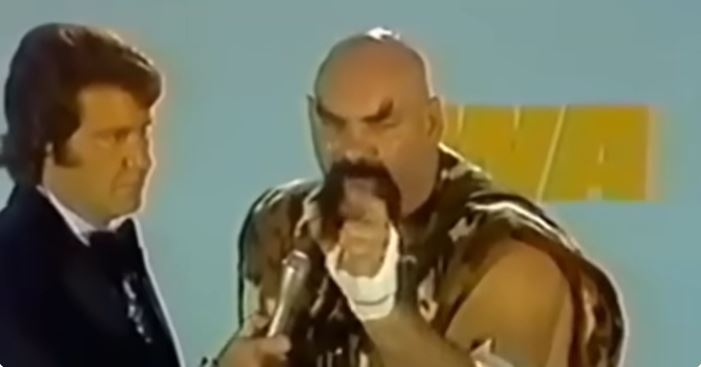
His finishing move was "the heart
punch". where he would...just punch a guy dead in the chest over
and over, until he collapsed.
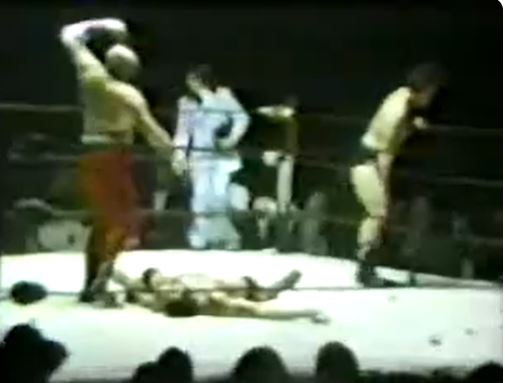
Seems damn pedestrian in comparison
to what came later. But as I think about it, while I would
certainly not want to have a grown many to a flying back flip
onto me, I find the heart punch way scarier, because of the
unknown...I don't
know what that would do, exactly. I can imagine what having a
grown man drop onto me would feel like, but a 300 pound man
punching me in the chest over and over, is a bit more
nebulous...could that cause a heart murmur?! Rupture an artery?!
I don't even like thinking about it. It's scary as hell
allowing the audience's imagination to fill in the blanks.
If had to choose between being
attacked by the guy on the right, or the guy on the left...
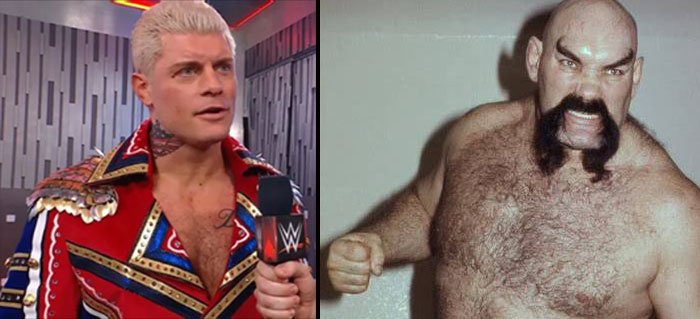
I'd defiantly take the one on the
right. The one on the left is a far better athlete...but Ox
Baker is terrifying. He looks like he places no value on human
life and his voice sounds like a demon who smokes two packs of
cigarettes a day. One guy has put all his focus into displaying
skill and the other put all his focus on making an emotional
connection to an audience. He growled hideous threats into the
microphone, he riled up the audience, he made people hate
him...which in turn made their emotional connection to his
opponent greater.
One could argue it's easier to riled up an audience as a bad guy
( or "heel" as they say in wrestling)...but this guy here was a
"good guy" (or "babyface")...
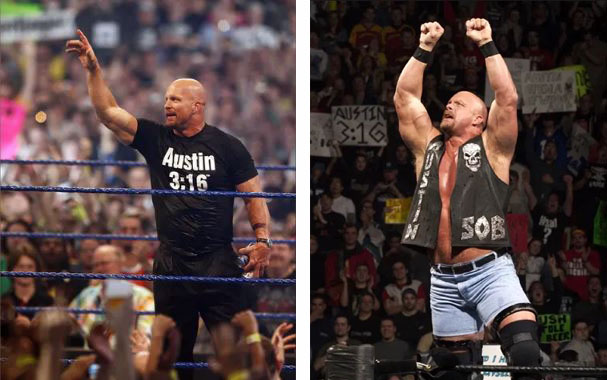
He made a connection
to an audience at a legendary level. He bled into the pop
culture itself. His finishing move...grabbing a guy's head and
falling down. He knew it was all
about storytelling and that's what he focused on.
You hear wrestling greats, the
Undertaker, Jim Cornett, and others, talking about the new wave of wrestlers
putting too much into fancy moves and not enough into getting
people to give a damn.
This concept crosses into drawing
comics, playing music, comedy, you name it. Is the particular
skill you are putting in actually serving the point of what you
are trying to get across...or are you showboating? Or are you
doubling down on the skill you are good at rather than learn
something new. "when the only tool you have is a hammer,
everything looks like a nail".
Back again to the concept that making showing off skill the
emphasis screws up your decision making- Say the script calls for the main character to get
into a car crash...and you get into your head to draw a car as
precise as possible, and have parts flying all over, have the
crushed metal look real, and people may marvel at how great that
car crash is drawn...but, is the point of that scene the car?
or what happens to the car? NO. The entire shot is probably a
bad choice because what you want is a shot that shows what
happens to the character, the character's expression, maybe the
expressions of onlookers...or something that makes the reader,
who has gotten to a point in the story where the character is in
mortal danger, FEEL something.
For the sake of the story, a panel of the character's face
hitting the steering wheel and a sound effect that says "CRASH"
is better than a masterpiece illustration of two cars colliding.
Here's a pro tip that applies pretty much only to comics,
because of the issue with creating a sense of timing. The
perception of the reader is affected by how detailed something
is. The more detail, the more words, in a given panel...the
longer it takes the reader to process and the longer that
instance feels like it's taking. It
subconsciously slows things down.
This is why a lot of "splash
pages" of action fall flat emotionally. It is supposed to be a
spilt second action but the reader spends an exorbitant amount
of time absorbing it. You want the reader to feel a jolt, draw
only a jolt.
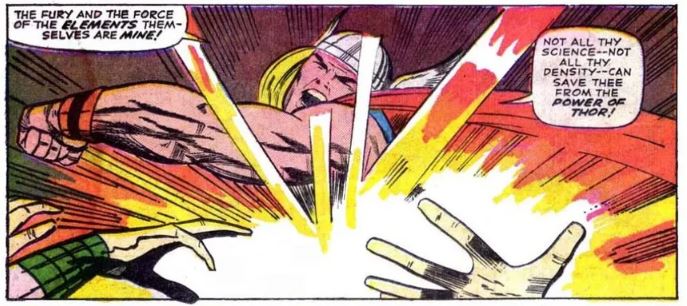
In speaking, often less words get the point across better than
more words. Visuals can have the same pitfall. When you draw a
page...ask yourself "is it talking too much?"
That there's a point where too much detail/demonstration of skill
is too much, is especially true in developing one's creative
voice. Specifically now to artists, we're in an era where there
is a giant population of people who can do stunningly intricate
work. Whether that is the by product of the digital tools at our
disposal or that the internet has made the world smaller and
more skilled people are able to put their work out, I don't
know. Probably a combination of the two. But the pool of genuine
creative voices hasn't seem to have grown. they are as few and
far between as ever and I think the focus on detail and
precision over remembering what you are trying to convey, is
hindering a lot of creatives from coming into their own.
We forget that connecting to an audience is what's important and
illustrations that go beyond that don't do much towards reaching
that goal. It's hard to accept that.
I'll give you an example of
my own, where the level of illustrative skill was not as
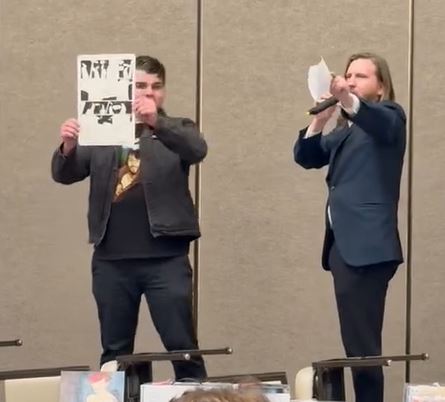
important as how well the illustrations told the story. At the comic book retailers convention ComicsPro last
year, they had an art auction, and a buddy sent me a clip of a
bidding war on one of my early pages...
Protect your art from AI with Glaze
or
Nightshade
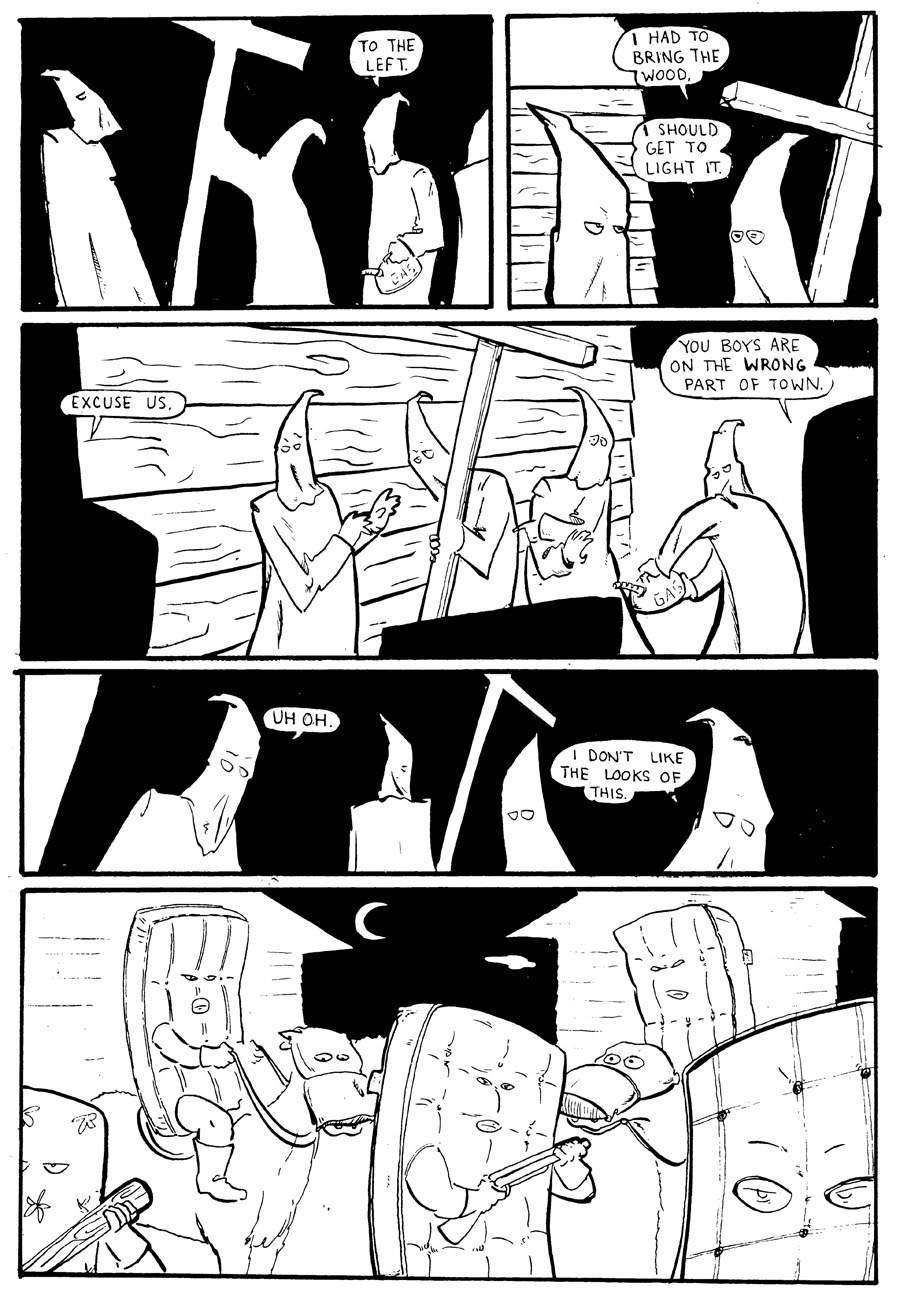
My honest first thought when seeing it was "sigh...that page.".
Like I
said, this was early on in my career and many levels below the illustrative
skill I have now, and as I recall done in a rush. So, I cringe a
little at how remedial my skills were then... BUT, people
bring this page up all the time, laughing about it while they do
so. At least one fan mentions it at
every convention I am at.
This page, less detailed, less precise than what I am capable of
now... hit the mark. That page was, with the goal of
storytelling in mind,
better than many others I drew before and after, despite being
slipshod in how well it was rendered.
It actually tells the story rather well, now that I look
at it again. A simple establishing shot of what you need to know
initially-KKK guys with a cross. Necessary dialogue in panel two
established that these KKK types are...perhaps not that
formidable- so we see the two talking with their pointy hoods
sagging and not particularly sinister looks on their faces.
Panel three and four are what's needed...one for their shock at
some interlopers and the other for a little drama/tension. Panel
six...is the reveal.
The art did what it needed to do to help tell the story. And...more detail, more realism...might have
ruined it. Maybe the level of illustration was just ridiculous
looking enough to make the whole thing work.
Now...I've likely gone so far over the top here as to be coming
across as- don't bother getting good at anything. That is so,
after this blog has entered you brain and gets watered down by
everything else in there, you'll still have the vague notion
that sometimes too much is too much and going all in on skill
comes with it's own pitfalls. People admire skill, the care
about characters.
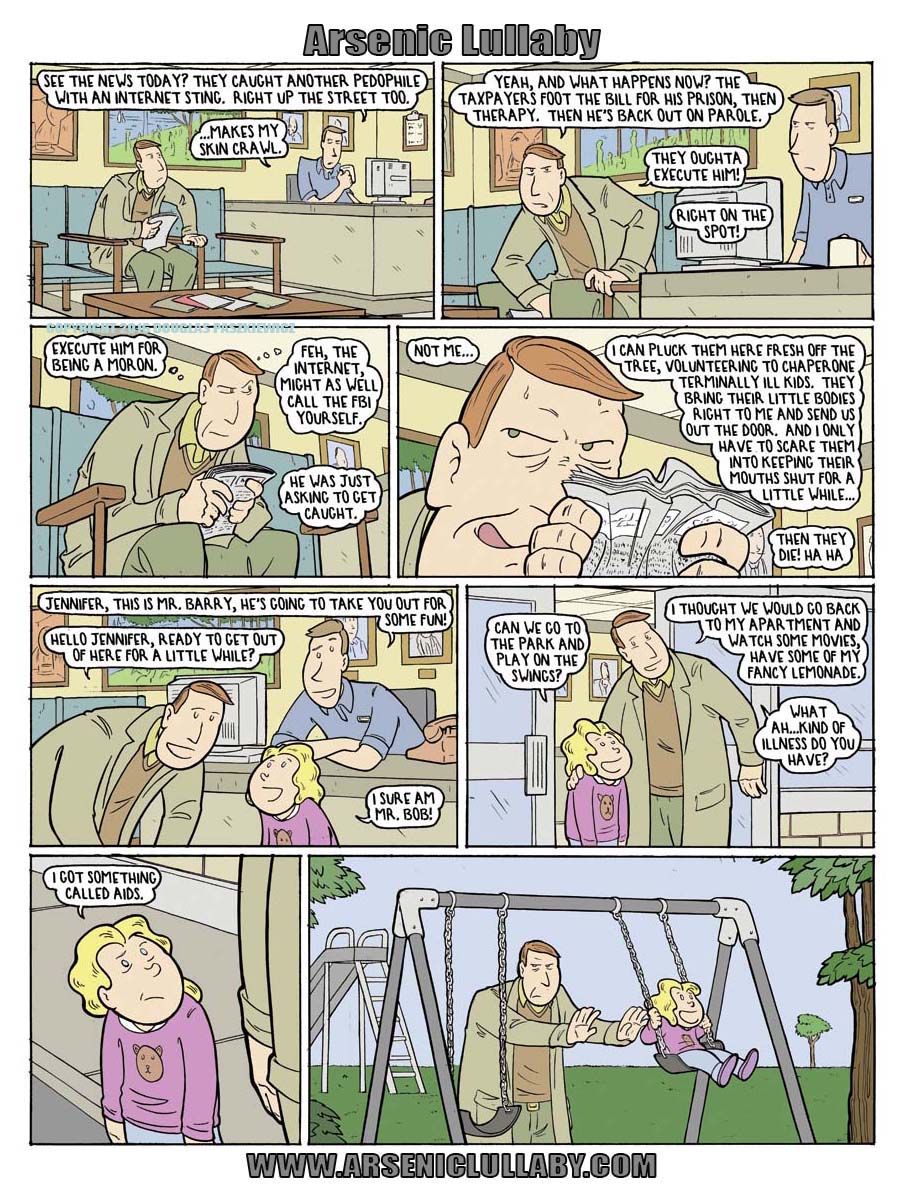
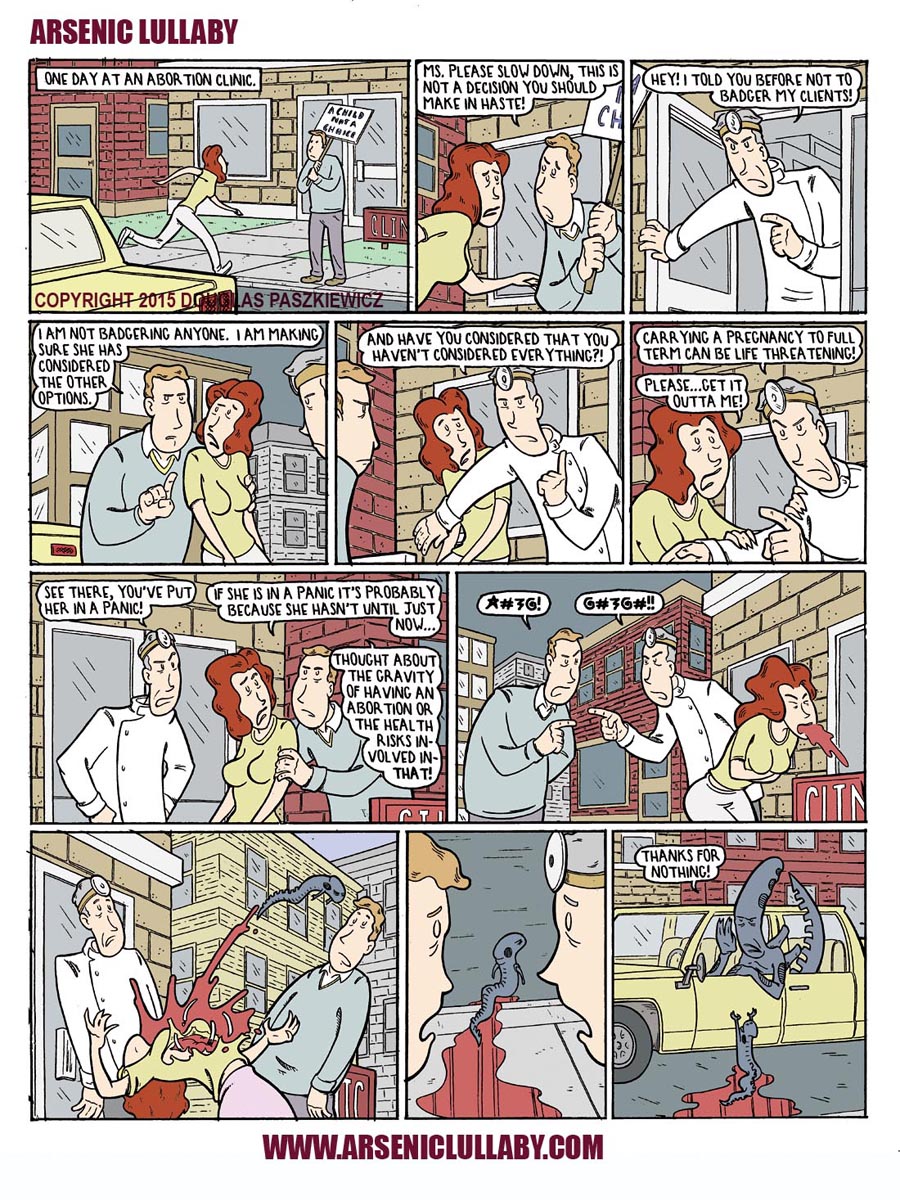
Anyways...I'll leave you with the a couple comics and talk to
you later
Note* These are pretty dark, but I did run my mouth for a whole
blog about stories that hit, so...I gotta make sure I end with
something that hits. Next time, I'll give you a love story.
Protect your art from AI with Glaze
or
Nightshade
Protect your art from AI with Glaze
or
Nightshade
 |
ARSENIC LULLABY ONLINE STORE
TEMPORARILY OPEN
10.00 off second print with coupon code- 2prints2 |